Fade Haircut Types: Which One Suits You
⏰ Short on time? Here's the summary
A fade gradually blends the hair on the sides and back from short to long, with no visible line. There are three main types of fade haircuts: low (subtle, starts near the ear), mid (starts at the temple, the most popular choice) and high (starts above the temple, the most contrast). Which fade suits you depends on your hair type and face shape. Plan on 2 to 4 weeks between trims, depending on how high the fade sits.
Touching it up yourself between barber visits? Do it with a good REVAHS clipper and the right guide combs.

The three fade haircut types: low, mid and high
Almost every fade you'll see at a barbershop is one of these three. Everything else is a variation on them.
Low fade
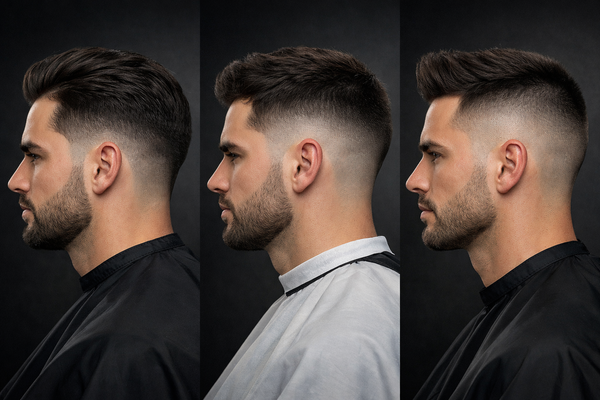
The blend starts just above the ear and continues into the neckline. It's the most subtle version: from the front you barely notice it, from the side it looks clean without standing out. It works with almost any hair type and in almost any workplace.
Mid fade
The blend starts at the temple, roughly halfway up the side. This is the most chosen fade, and for good reason: enough contrast to look sharp, without being too bold. If you're torn between the three, this is the safe pick.
High fade
The blend starts above the temple. The contrast between short and long is strong, which gives the cut a sharp, bold look, and puts real pressure on the top to look on point, since that's where all the attention goes. A high fade also grows out of shape the fastest.
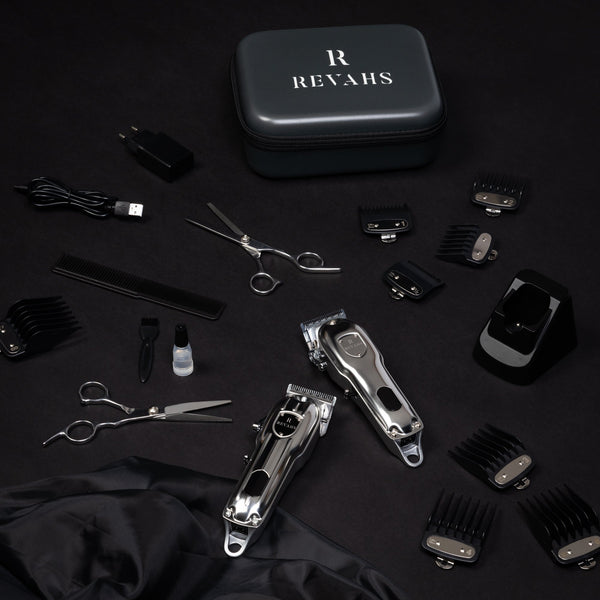
REVAHS clippers are widely used for cutting a sharp fade, thanks to the taper lever that makes exact blends possible. Curious how those blends look in practice? Take a look at the REVAHS Clipper Two, with settings of 0.5, 1, 1.5, 2.5 and 3.5 mm.
Fade or taper: what's the difference?
These two get mixed up constantly. With a taper, only the edges get shorter: the neckline and around the ears fade down, while the rest of the side stays at length. With a fade, the entire side blends into the transition.
In short: a taper is a clean finish on the edges, a fade is a haircut in its own right. If you want something that barely shows as it grows out, go for a taper or a low fade.
Which fade suits your hair type?
Short hair on top
With a short top, you need contrast, otherwise the whole cut reads as one flat length. A mid or high fade works best here. A low fade with very short hair on top quickly ends up looking like an ordinary short cut.
Long hair on top
With more length on top, a low or mid fade is the better choice. The length up top already provides the contrast; adding a high fade on top of that quickly makes the whole look top-heavy. Longer hair also falls more naturally over a lower fade when worn down.
Curly hair
Curls and fades pair extremely well. The dense curl on top against the tight sides gives exactly the contrast that makes a fade pop. One thing to watch: curls spring up as they dry, so the blend can look different wet than dry. Always have your barber finish the fade on dry hair.
Thin or thinning hair
A fade is often a smart move here. Keeping the sides short makes the difference in density on top far less noticeable. Just don't go too high: a high fade draws attention straight to the crown, which is usually exactly where you don't want the focus.
Which fade suits your face shape?
| Face shape | Best choice | Why |
|---|---|---|
| Round | Mid or high fade | Tight sides and volume on top visually lengthen the face |
| Long | Low fade | Keeps width at the sides so the face doesn't look even longer |
| Square | All three | A strong jawline carries almost any fade well |
| Heart-shaped | Low or mid fade | Prevents the narrower lower part of the face from standing out even more |
Take this as a guideline, not a rule. Your hairline, hair density and how you wear the top matter just as much.
Fading a fade into a beard
If you have a beard, the question is what happens at the jawline. You've got two options.
Connected: the fade blends into the beard at the sideburns, so there's no hard line anywhere. This looks the most polished, but it takes upkeep. As soon as either one grows out, the connection falls apart.
Separated: the fade ends at the jawline and the beard starts with its own clean line. Sharper and easier to maintain, but it does need a crisp line.
Fades for children
For children, a low fade works best. The blend sits low, grows out gently, and you're not back in the chair every two weeks. It's also less bold, which tends to go over better at school.
Cutting it yourself? Keep sessions short and use longer guide combs, so a sudden move doesn't leave a visible gap.
What to tell your barber
The hardest part of getting a fade isn't the haircut, it's the conversation beforehand. "Just make it short" rarely gets you what you had in mind. These four lines cover everything:
- Name the type and the height. "A mid fade, blend starting at the temple."
- Say how short the bottom can go. "As short as it goes at the bottom" or "about half a millimetre at the bottom, not down to the skin."
- Say what should stay on top. "Keep the length on top, just take off the ends."
- Specify your neckline and beard. "Round neckline" or "blend the fade into the beard."
Bring a photo. Barbers work far better from an image than a description, and it saves you both time.
How long does a fade stay sharp?
Plan on two to three weeks, depending on how fast your hair grows and how high the fade sits. A high fade grows out of shape the quickest because the blend sits on the widest part of your head. A low fade can often go a full four weeks.
That's exactly why a lot of guys start touching it up themselves. You don't need to reset the whole fade. Just maintaining the bottom zone and the neckline keeps it sharp two to three weeks longer.

REVAHS Clipper Two
Widely used for cutting and touching up fades at home: a taper lever from 0.5 to 3.5 mm, four guide combs and ceramic blades for a sharp, even blend.
Shop the Clipper TwoCutting or touching up a fade yourself?
Our step-by-step guide covers how to set your zones and blend them without hard lines: how to cut a fade in 9 steps.
Frequently asked questions
What is a fade haircut?
A haircut where the hair on the sides and back gradually blends from very short to longer hair on top, with no visible line.
What types of fade haircuts are there?
The three you'll see most are the low fade (blend near the ear), the mid fade (at the temple) and the high fade (above that). There's also the taper, where only the edges fade down.
What's the difference between a low, mid and high fade?
Just the height where the blend starts. The higher it starts, the more contrast, and the faster the cut grows out of shape.
Which fade suits short hair?
A mid or high fade. With a short top you need contrast, otherwise it reads as one flat, even cut.
Can you get a fade with curly hair?
Yes, and it often looks great. Just always have it finished on dry hair, since curls spring up as they dry.
How often do you need to get a fade touched up?
Two to three weeks for a mid or high fade, up to four weeks for a low fade.